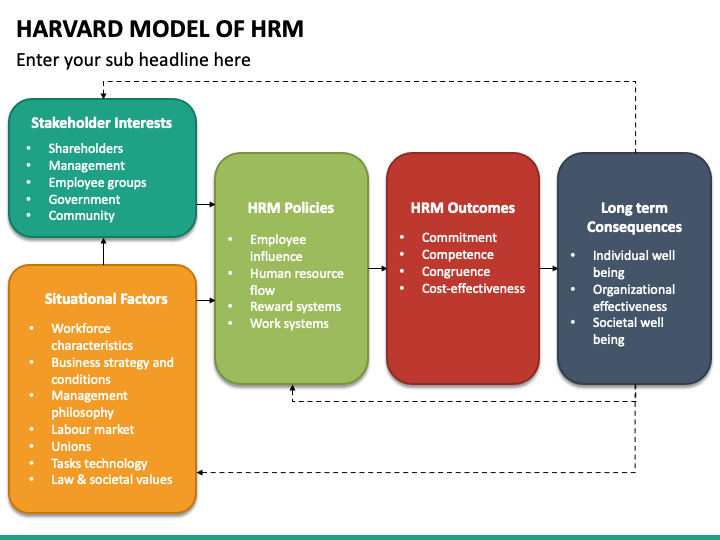
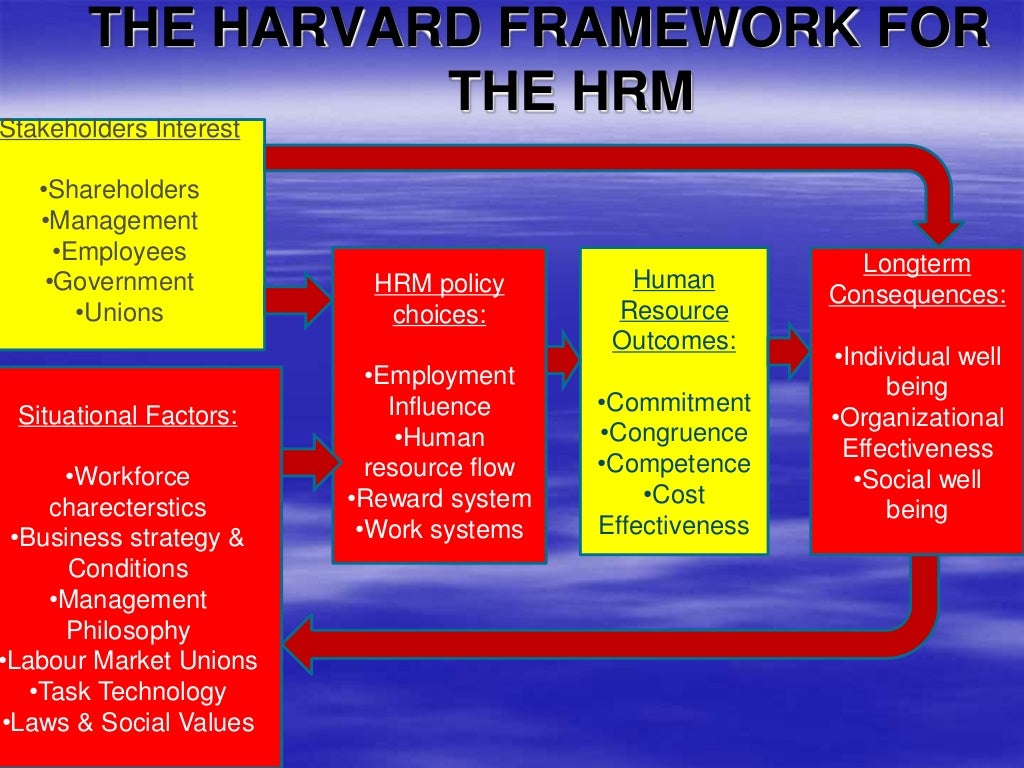
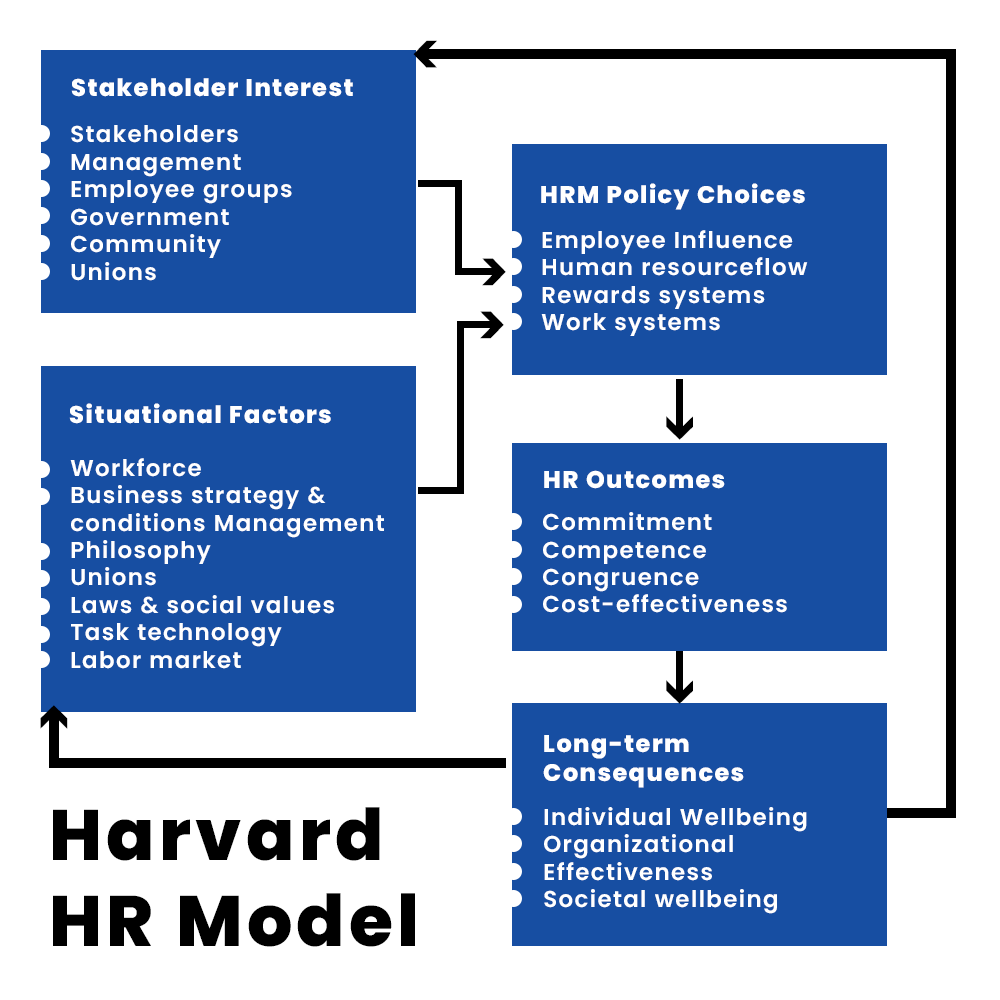
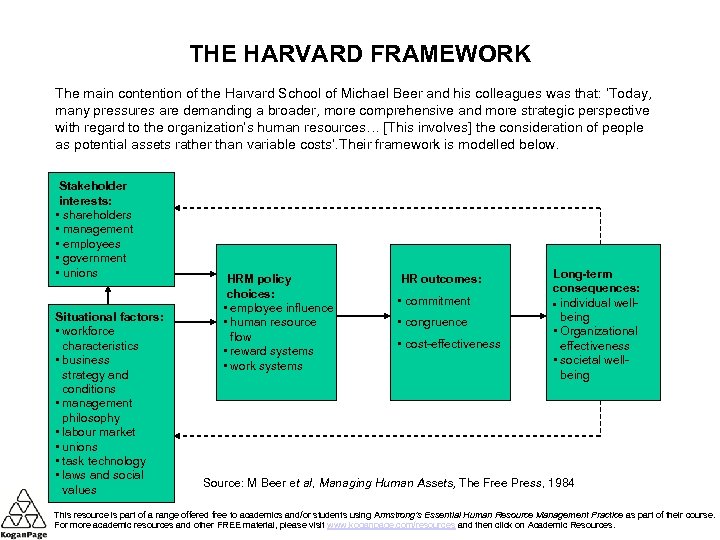
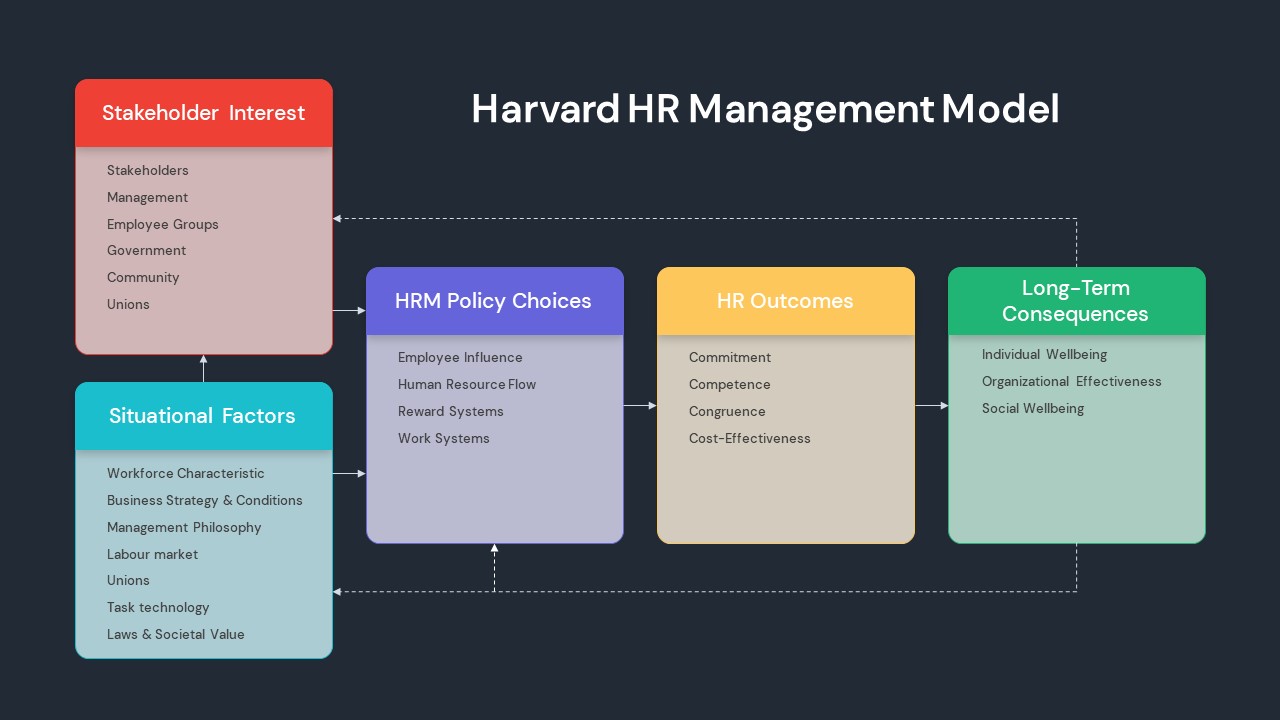
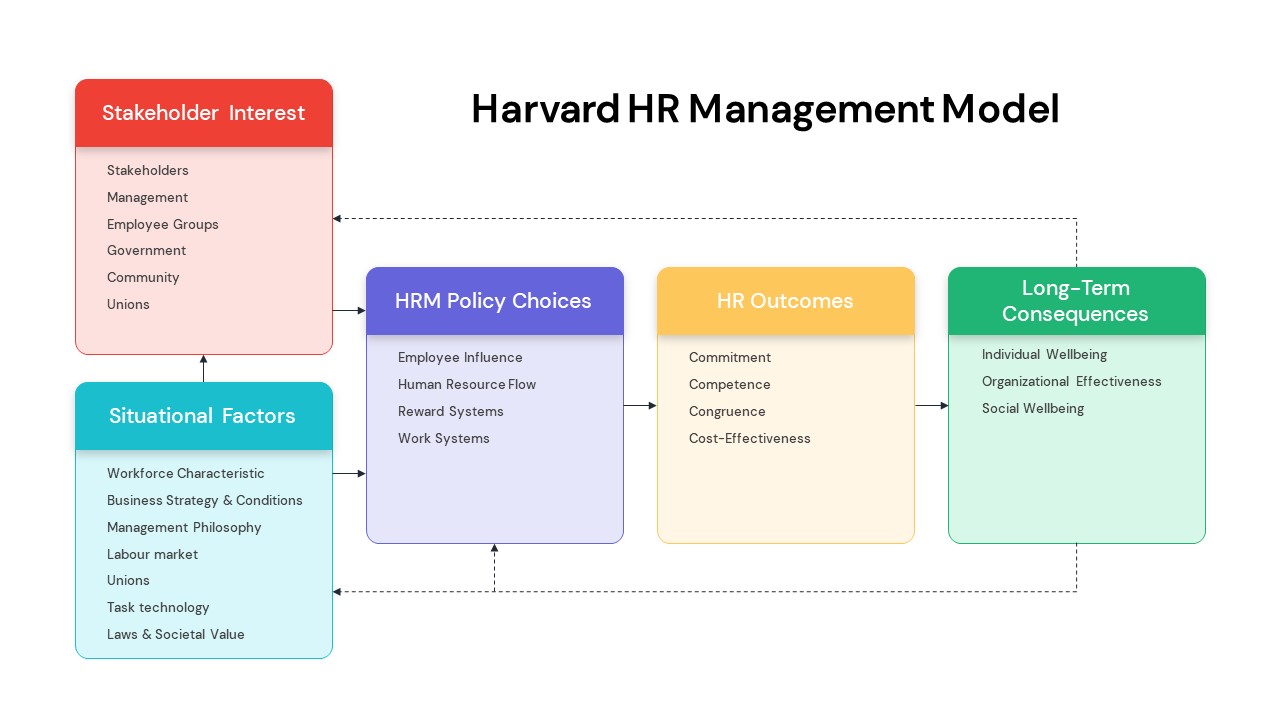
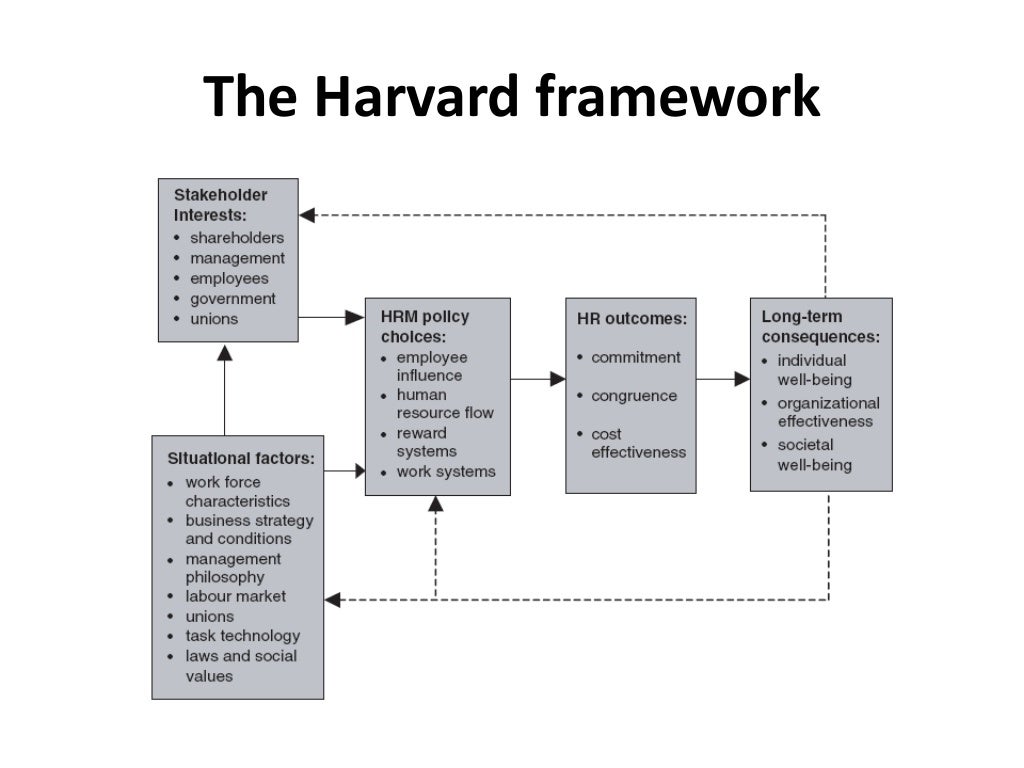
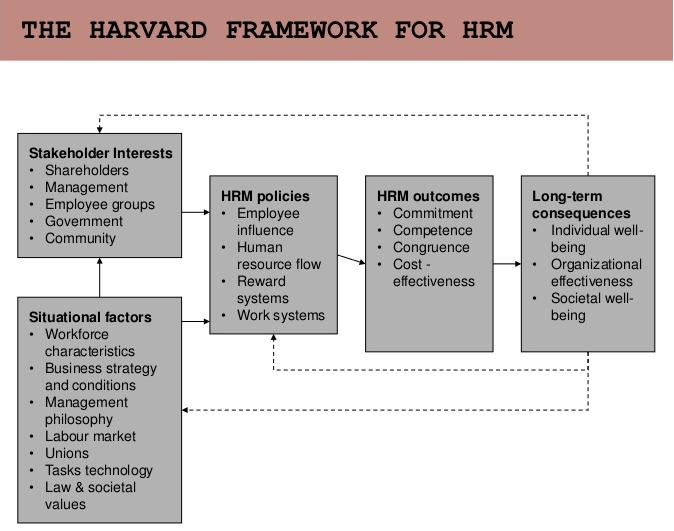
The Harvard Model of HRM is a widely-recognized managerial approach to human resource management (HRM). It began as a research HR project in the 1980s by the Harvard Business School. It’s known for providing a balanced approach to personnel decisions and emphasizes the need for a commitment to employee development and support.. Abstract. Within the Australian context of a shortage of skilled professionals, this article uses the Harvard model of human resources management (HRM) to conceptualise how changes in stakeholder interests coupled with changes to situational factors affect public sector HRM policy choices that in turn affect HRM outcomes for different types of public sector employees.

PPT Human resource management Chapter 17 PowerPoint Presentation, free download ID451493
Harvard Model of HRM PowerPoint Template PPT Slides

Harvard Model on Human Resource Development Human Resource Management Employment
Human resource management model
Harvard Model For Human Resource Management

Harvard Models PDF Human Resource Management Strategic Management
What Is The Harvard Framework Of Hrm

What Is The Harvard Framework Of Hrm
Harvard HR Management Model SlideBazaar

Harvard model of HRM Download Scientific Diagram
Harvard HR Management Model SlideBazaar
Harvard Model of HRM l Human Resource Management Models YouTube

Top 10 HR Models Every Human Resources Professional Should Know Human Resources

8 HR Models Every HR Practitioner Should Know in 2023 AIHR

Models of HRM Harvard Framework for HRM
Models of HRM human resource management Manu Melwin Joy

Harvard model of HRM Download Scientific Diagram
The Harvard Model of HRM and Technological Changes
Human Resource Management Models Management Study HQ

The harvard framework human resource management Manu Melwin Joy
Human resource s management (HRM) practices have changed in public sector organisations over the past two decades because of the implementation of new public management (NPM).. The Harvard Model is an effective approach to managing human resources within an organization due to its five primary components: situational factors, stakeholder interests, HRM policies, HRM outcomes, and long-term consequences. These components help to identify and systematically address the organization’s needs.


![Down By The River Milky Chance [Frontal Roast Remix] YouTube](https://i.ytimg.com/vi/e2gksjHVL0k/maxresdefault.jpg "Down By The River Milky Chance [Frontal Roast Remix] YouTube")